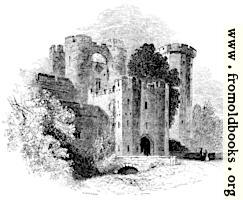
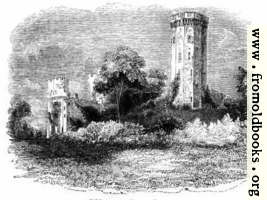
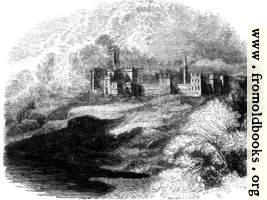
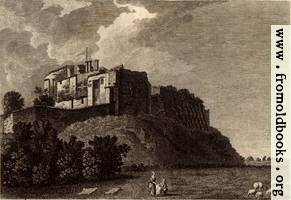
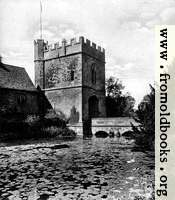
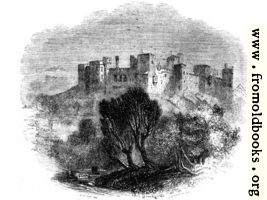
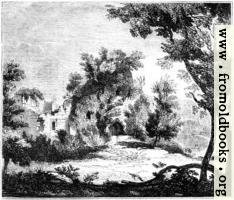
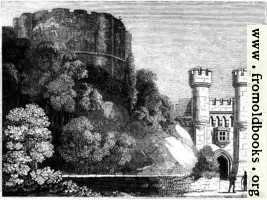
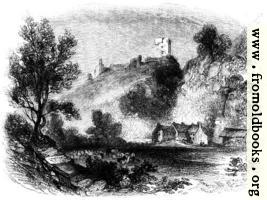
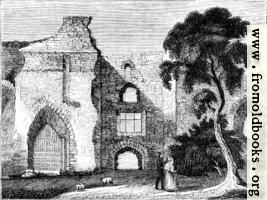
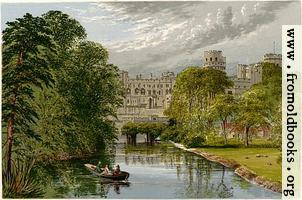
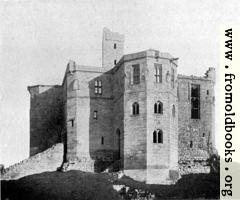
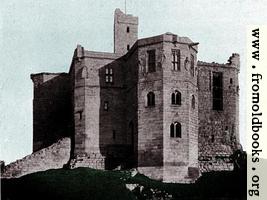
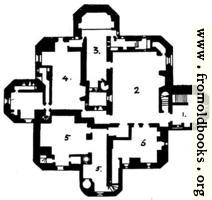
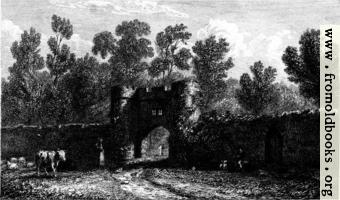
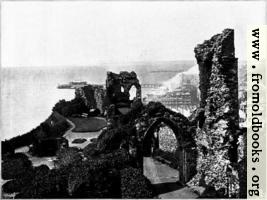
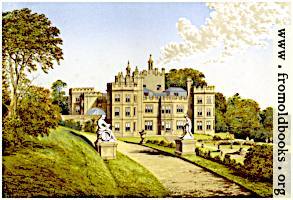
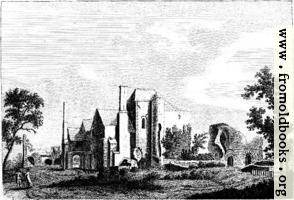
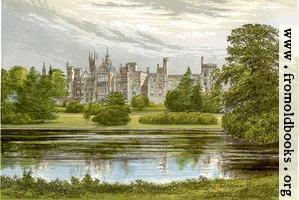
castles: A fortified defensive building or structure. Strictly speaking, a castle was also a home, whereas a fort was purely defensive, but I have used castle for any fortified place. A castle may also have had a dungeon or donjon, a sort of prison for offenders and captured soldiers.
Synonyms:
fort, keep, garrison
England, the “predominant partner” of the United Kingdom of Great Britain and Ireland, comprises along with Wales the southern, and by far the greater, portion of Great Britain, the largest of the European islands; it is separated from the Continent on the E. and S. by the North Sea and English Channel, and from Ireland on the W. by St. George's Channel, while Scotland forms its N. boundary; its greatest length N. and S. is 430 m., and greatest breadth (including Wales) 370. It is of an irregular triangular shape; has a long and highly-developed coast-line (1800 m.); is divided into 40 counties (with Wales 52); has numerous rivers with navigable estuaries, while transit is facilitated by a network of railways and canals; save the highlands in the N., and the Pennine Range running into Derby, England is composed (if we except the mountainland of Wales) of undulating plains, 80 per cent, of which is arable; while coal and iron are found in abundance, and copper, lead, zinc, and tin in lesser quantities; in the extent and variety of its textile factories, and in the production of machinery and other hardware goods, England is without an equal; the climate is mild and moist, and affected by draughts; but for the Gulf Stream, whose waters wash its western shores, it would probably resemble that of Labrador. Under a limited monarchy and a widely embracing franchise, the people of England enjoy an unrivalled political freedom. Since Henry VIII.'s time, the national religion has been an established Protestantism, but all forms are tolerated. In 1896 education was made free. The name England is derived from Engle-land, or land of the Angles, a Teutonic people who, with kindred Saxons and Jutes, came over from the mainland in the 5th century, and took possession of the island, driving Britons and Celts before them. Admixtures to the stock took place during the 11th century through the Danish and Norman conquests. E. annexed Wales in 1284, and was united with Scotland under one crown in 1603, and under one Parliament in 1707.
Population (1907) 27,000,000
Places Shown
Alton Towers; Staffordshire; England
Broughton; Banbury; Oxfordshire; England
Castleton; Derbyshire; England
Goodrich; Herefordshire; England
Mount Edgcumbe House and Country Park; Cremyll; Torpoint; Cornwall; England
Newark; Nottinghamshire; England
Warkworth; Northumberland; England