This site may be going away; please consider the Donate link above... or LiberaPay:
A huge thank you to all who donate; 2026 Q3 Web hosting $7.02 / $400.
Buy print-size file for commercial or other use
| 402x500 | 58K | jpg free download |
| 120x149 | 6K | jpg free download |
| 161x200 | 9K | jpg free download |
| 604x750 | 136K | jpg free download |
| 941x1169 | 359K | jpg free download |
| 1882x2338 | 1M | jpg free download |
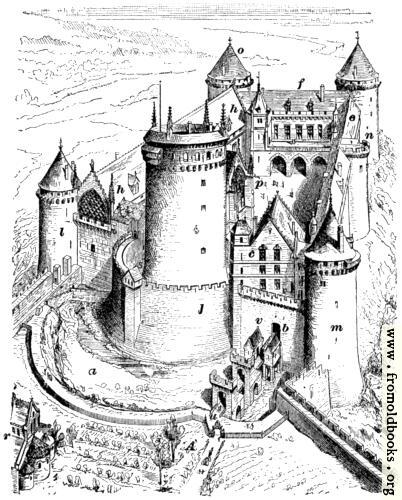
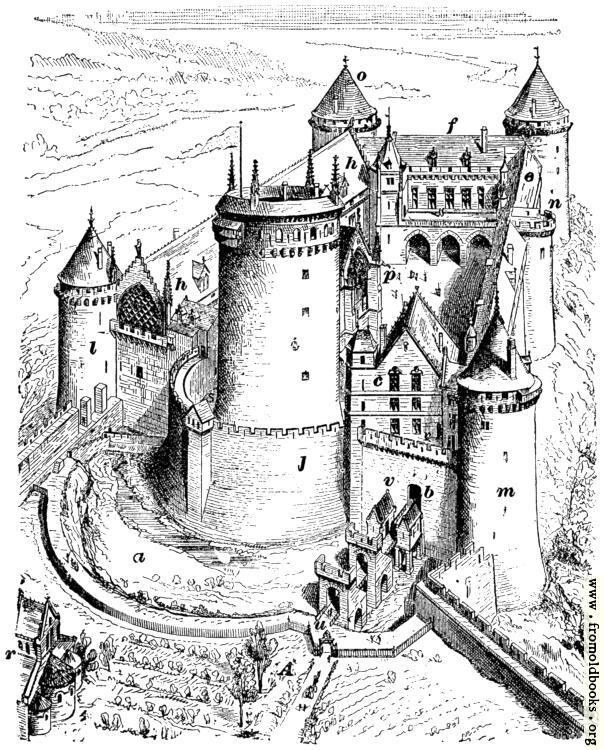
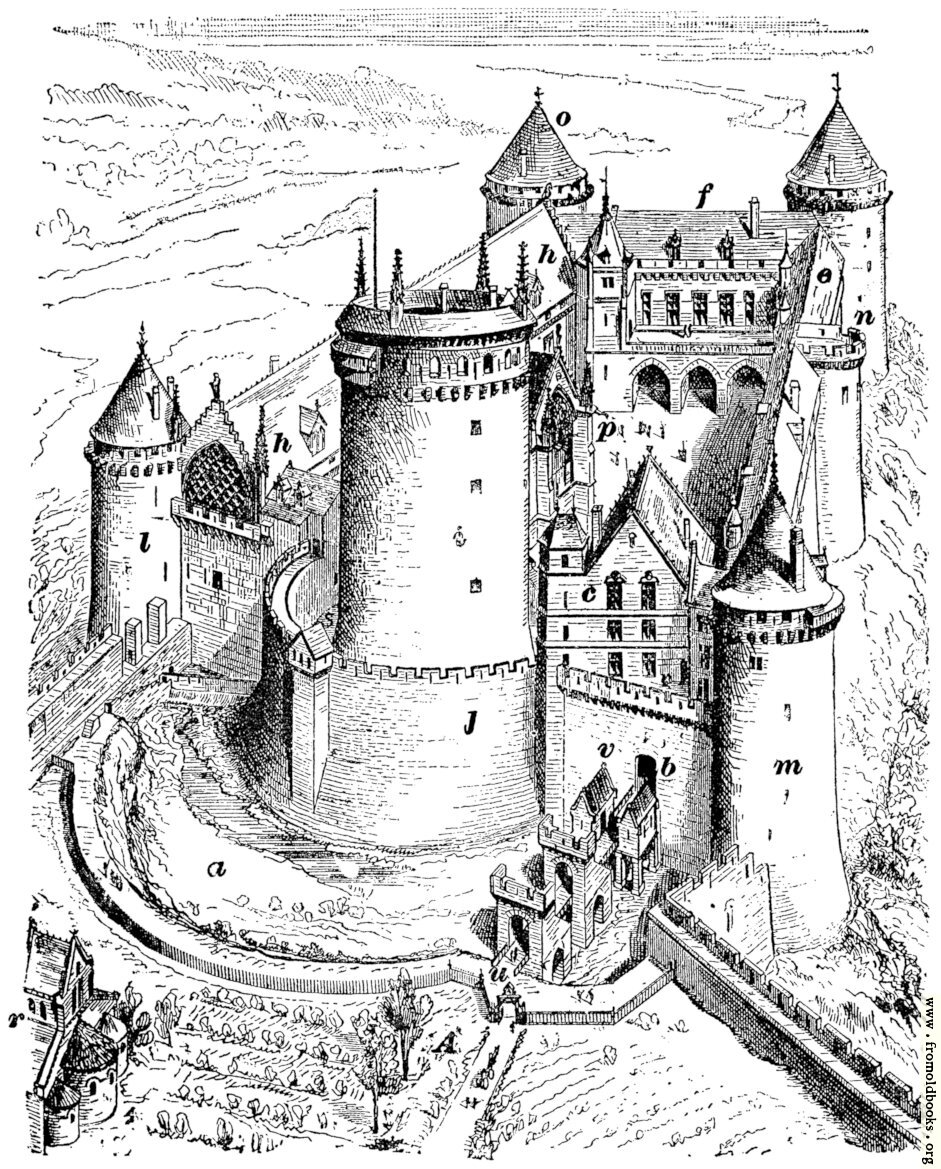
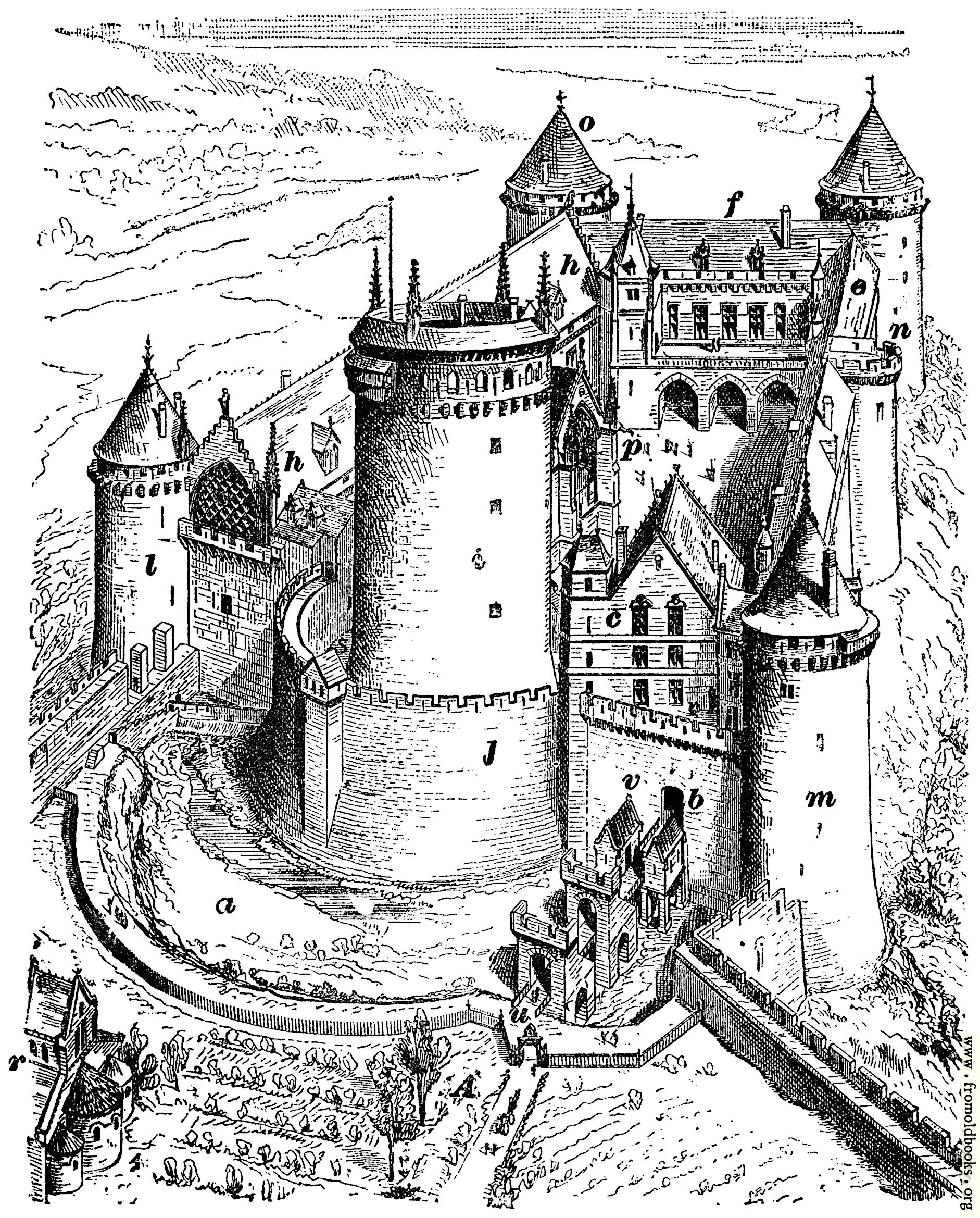
Coucy Castle, Bird’s Eye Drawing with labels, in Coucy-le-Château-Affrique, Picardy, France more
castles, towers, turrets, drawings, people, battlements, arches, windows, fortifications, labels
The original drawing of Coucy Castle was reproduced in the book on drawing with the parts labeled with letters; this version of the castle drawing retains those letters.
Coucy Castle drawing without labels
152. In Fig. 123 is shown a bird’s-eye view of the castle of Coucy and the surrounding country. Around the top of each of its five towers will be observed small projections that carry an enclosed gallery. The spaces between these projections, or corbels, as they were called, were open through the floor of this overhanging gallery, and, in time of siege, when the walls of the castle were surrounded by sappers and miners endeavoring to disintegrate the stonework and gain access to the interior, deadly missiles were shot straight down from the floor of the gallery, or quantities of boiling oil or molten lead were used to make the base of the walls as unapproachable as possible.
The windows in the castle all opened on the inner bailey, no openings being permitted toward the outside except small loopholes of sufficient size only to shoot an arrow through. The tops of the individual walls enclosing the inner bailey were notched, and the rectangular sections of wall between the notches—called battlements—each contained a large loophole, as may be seen in the perspective view at j. Behind these battlements was a platform on which archers could stand and shoot at an invading force, while a similar treatment of the top of the walls around the outer bailey enabled the besieged to defend the outer bailey against the besiegers before finally retiring within the castle walls for safety.
All these details were altered from time to time, as civilization advanced, and when the invention of gunpowder rendered the castellar system of defense obsolete, the corbels, battlements, and other details of feudal military origin were still retained as ornamental features in many of the buildings developed from the castellar plan. (p. 124)