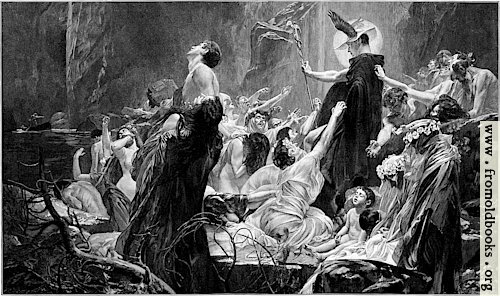
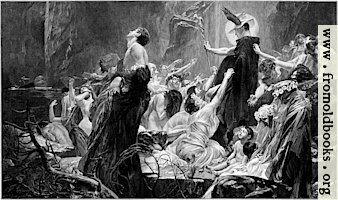
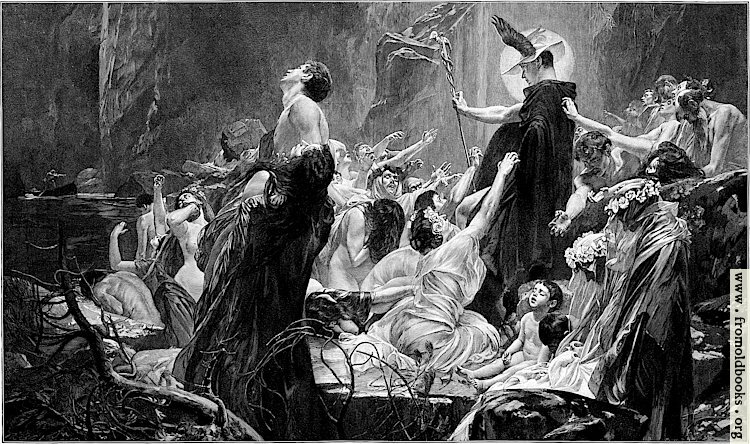
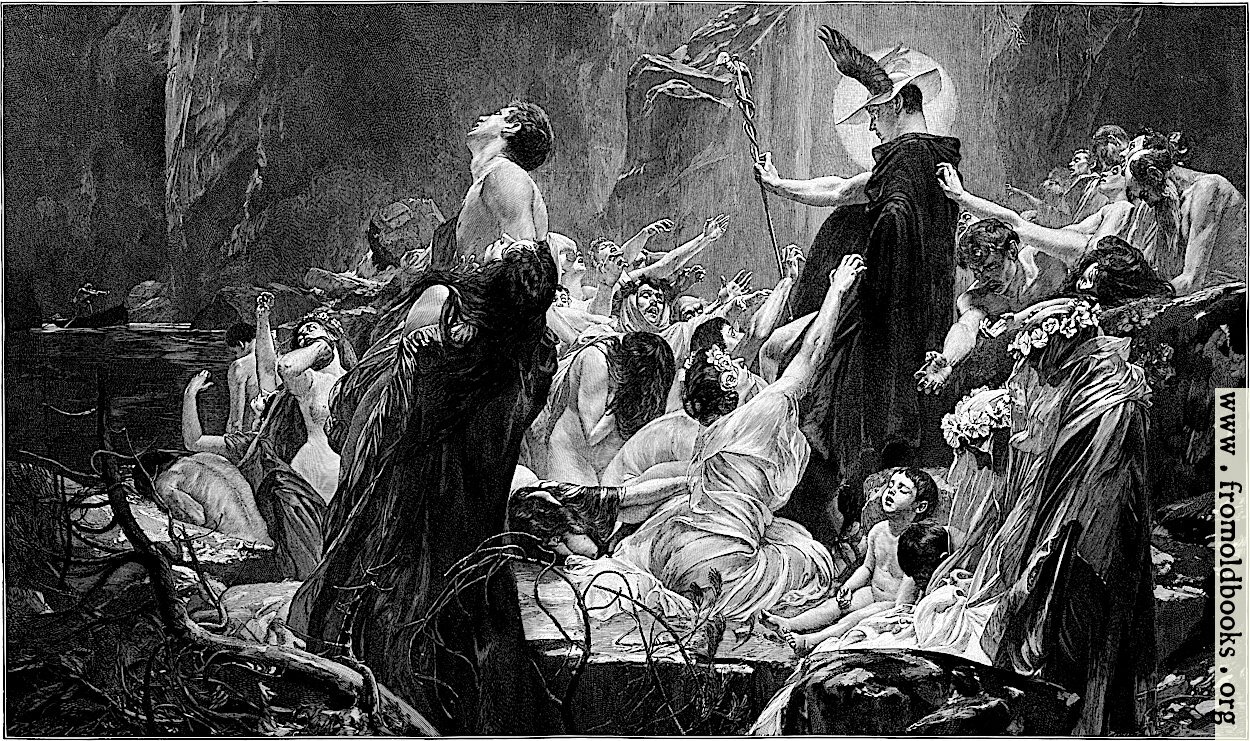
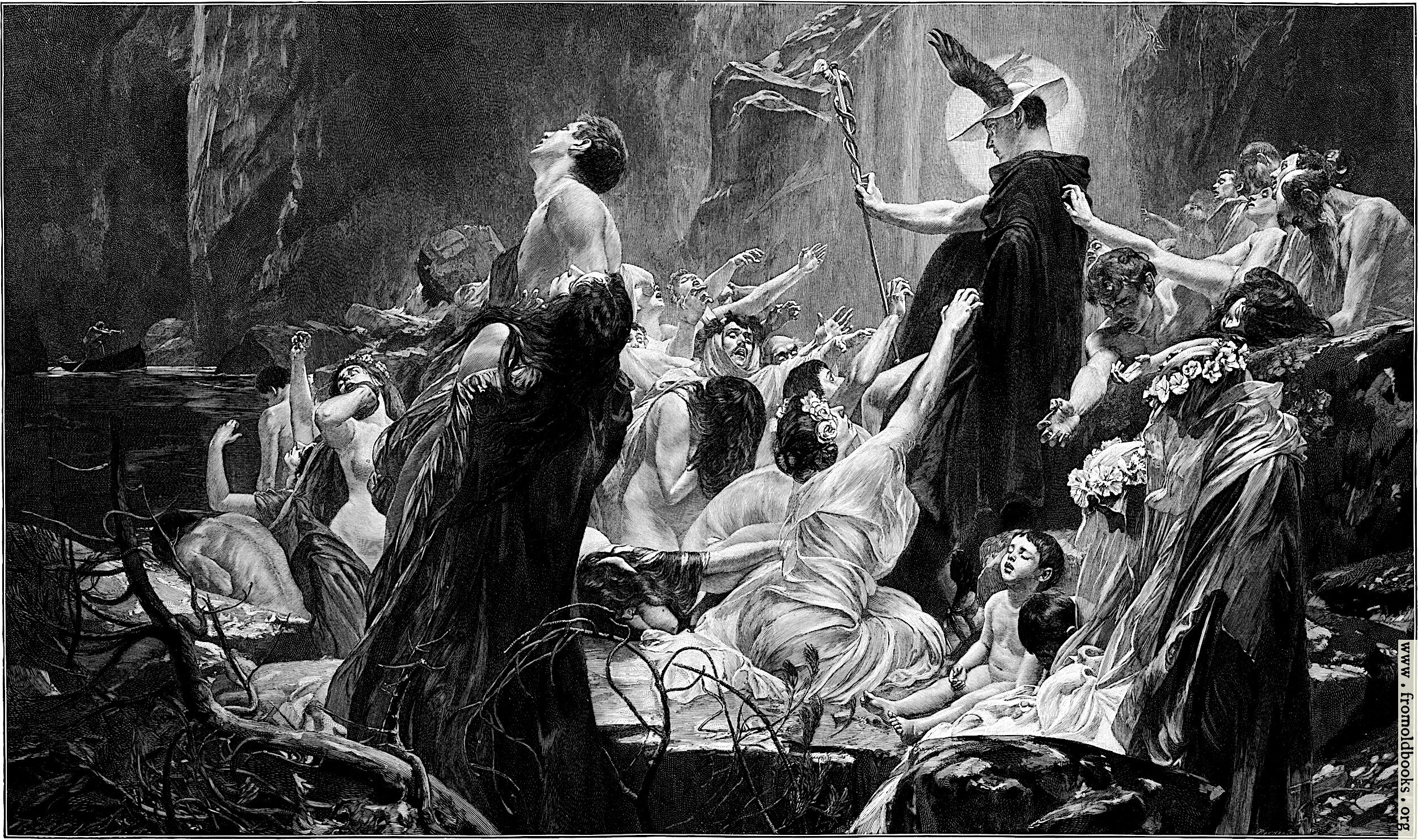
Here we see the ferryman, Charon, at left, bringing souls of the dead on his boat into the underworld. They are greeted by Hermes, to the right of the centre of the picture, who wears a grovvy hat with wings.
In the original oil painting, the people are all grey-skinned, except for Hermes. The lady reaching up to him wears a bright blue diaphonous dress.
The text was translated automatically:
The original German (via OCR) follows:
Hirschls grosses figurenreiches Bild „Seelen am Acheron" stellt eine Scene aus der antiken Göttersage dar. Der hellenische Volksglaube dachte den Eingang zur Unterwelt am Acheron, jenem kleinen Fluss, der die epirotische Landschaft Thesprotia durchströmt, und an dessen oberem Laufe, im heutigen Kakosuli, sich eine enge düstere Schlucht befindet. Hermes begleitet nach der Sage die Seelen der Verstorbenen, die zum Aufenhalt in der Unterwelt, zu einem licht- und freudelosen, schemenhaften Dasein bestimmt sind, bis an den Fluss, wo der Ferge Charon sie auf seinem Kahn in die Unterwelt bringt, die von dem Hunde Kerberos bewacht wird. Die Hauptfigur unseres Bildes stellt Hermes dar, mit der Chlamis bekleidet und bedeckt mit dem von zwei Flügeln gekrönten Hut, die ihn als Windgott kennzeichnen, als der er eigentlich zu denken ist. Links kommt der Fährmann Charon herbei, um die Seelen zu holen; derselben bemächtigt sich eine wilde Angst und sie suchen vergeblich Hermes um Befreiung anzurufen. Der Aufenthalt in der düstern Unterwelt hatte für die an Sonne und Heiterkeit gewöhnten Griechen natürlich etwas Schreckliches. Sie fürchteten sich deshalb vor dem Eingehen in das Reich des Hades. Tief unter der Oberfläche der Erde thront er als Herrscher über die Verstorbenen. Man dachte sich den finsteren König der Unterwelt furchtbar und schrecklich; durch Bitten und Schmeicheln ist er nicht zu erweichen: nur dem Orpheus gelang es durch die Gewalt seines Gesanges, ihn zur Rückgabe der Eurydike zu bewegen. Mit den drei Totenrichtern Aiakos, Minos und Rhadamanthys richtet er über alle Thaten der Sterblichen, besonders rächt er die Meineide und vollzieht die Flüche der Menschen.
![[Picture: Souls on the Acheron River]](https://www.fromoldbooks.org/ModerneKunst-14/pages/plate-062/plate-062-q85-338x200.jpg "[Picture: Souls on the Acheron River]")