Spinning Jennydetails

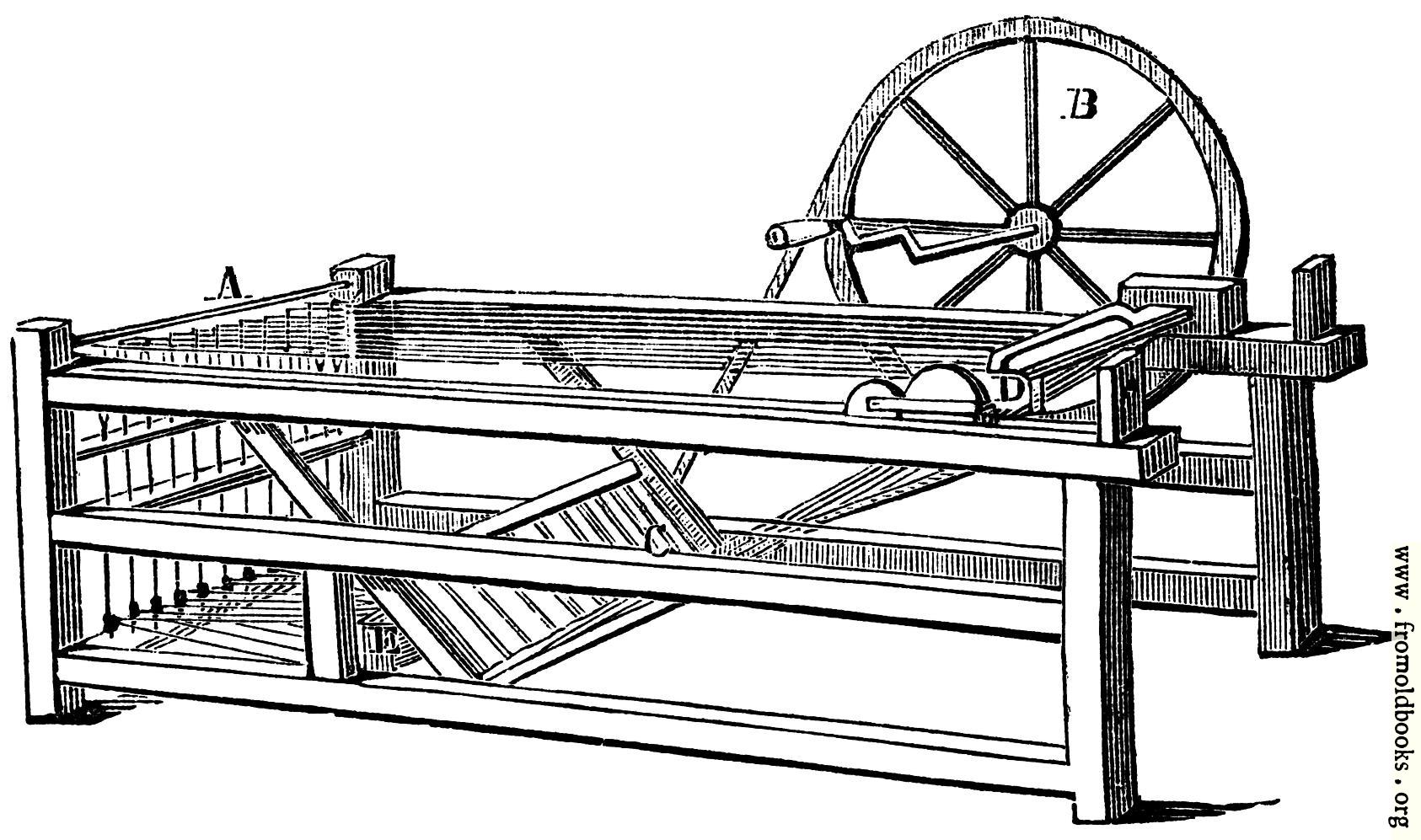
[Picture: Spinning Jenny]
previous image
up
624115_300x250 Hang out in an empty Sistine Chapel
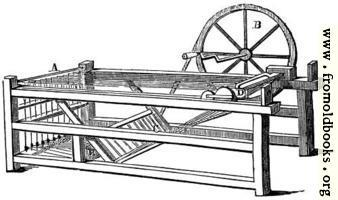
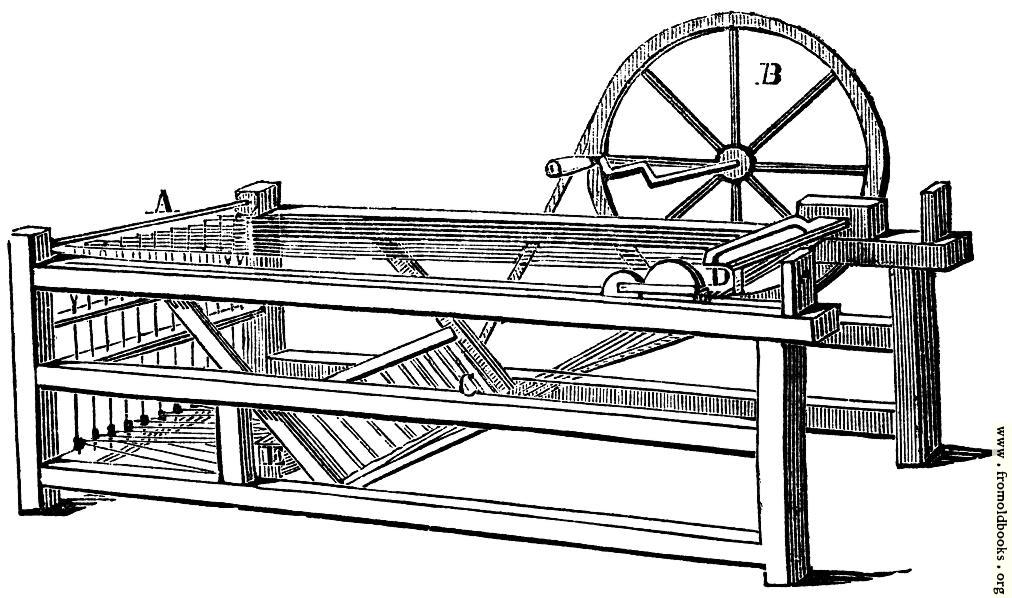
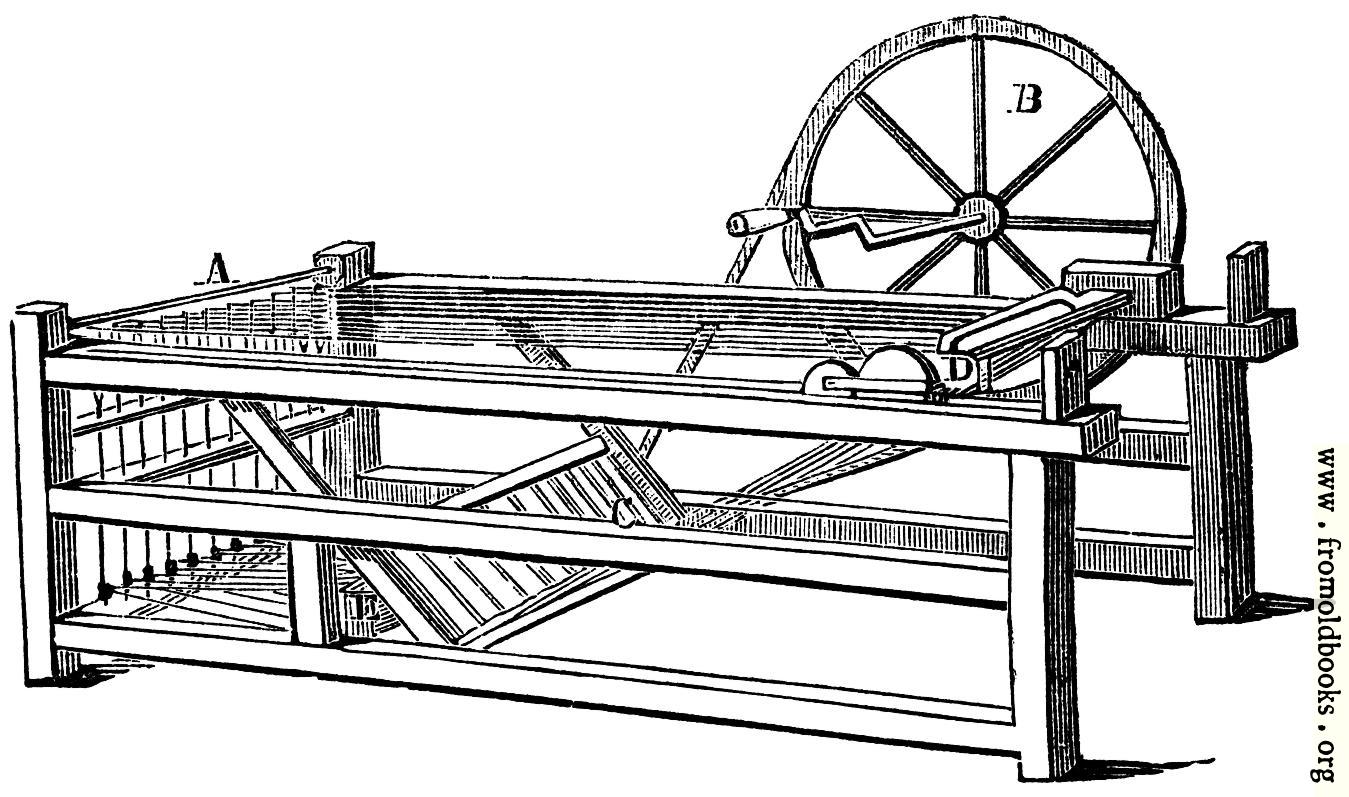
Image title: Spinning Jenny
Source: Antisell, T.: “Hand-book of The Useful Arts” (1852)
Place shown: none
Keywords: machinery, diagrams, greyscale
Status: out of copyright (called public domain in the USA), hence royalty-free stock image for all purposes usage credit requested
Please do not redistribute without permission, since running this site is expensive.
Share/Bookmark Arts Blogs - Blog Top Sites

“The mule-jenny was invented by Crompton, of Bolton, England. This machine is so named because it is the offspring, so to speak, of two older machines, the jenny and the water-frame. A mule is mounted with from 240 to 1000 spindles, and spins, of course, as many threads.

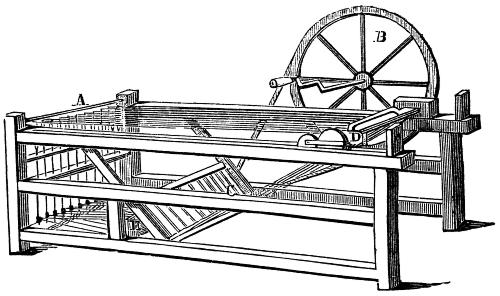
The following cut [i.e. woodcut, or figure] represents the original jenny of Hargreaves, by which one person was enabled to spin from 16 to 40 threads at once. The soft cords of rovings wound in double conical cops upon skewers, were placed in the inclined frame at c; the spindles for first twisting and then winding-on the spun yarn were set upright in steps and bushes at a, being furnished near their lower ends with whorls, and endless cords, which were driven by passing round the long-revolving drum of tin plate e. d is the clasp or clove, having a handle for lifting its upper jaw a little way, in order to allow a few inches of the soft roving to be introduced. The compound d being now pushed forward upon its friction wheels to a, was next gradually drawn backward, while the spindles were made to revolve with proper speed by the right hand of the operative turning the fly-wheel b. Whenever one stretch was thereby spun, the clove frame was slid home towards a; the spindles being simultaneously whirled slowly to take up the yarn, which was laid in on a conical copby the due depression of the faller wire at a with the spinner’s left hand.

The yarn being now spun into either fine or coarse thread, is applicable for the warp or weft in woven goods; when the weaving is done at home, it is by hand-loom; when in a factory, it is by power-loom. This process will be followed under Weaving and Texture Fabrics.” (pp. 108 – 9)

Dimensions: 70 x 42mm (2.8 x 1.7 inches)
Filename: 109-Spinning-Jenny-q75-500x296.jpg
Scanner dpi: 2400
Unmarked: You can get a version of this image without the watermark at the lower right corner by requesting it in using the comment link below. The images are watermarked to help people find where they came from if they get reposted to blogs or other sites. Images under 1200 pixels on a side are still free, although I will ask for a donation :-)
Comment: Add a link, leave a comment or change keywords

$Id: mkgallery,v 1.27 2012/09/03 22:34:40 liam Exp liam $

Valid XHTML 1.0! Valid CSS!