fromoldbooks.org
Items matching anglosaxon remains taken from Old England: A Pictorial Museum (1845)


New search

Results 1 .. 3 of 3

Old England: A Pictorial Museum of Regal, Ecclesiastical, Baronial, municipal and Popular Antiquities, Charles Knight (1791 – 1873) London, Charles Knight and Co., Ludgate Street, First Edition, 1845, two volumes, folio, pp. viii, 392; vi, 386, 24 chromoxylographs (incl. frontis.). Many wood-engraved text illustrations.

My copy has contemporary (worn) half-calf with gilt backs; there is some light foxing and dampstaining to the plates and margins of some leaves. Ref. Abbey, Life, 43; purchased D. & E Lake Toronto, 1992.

This book has been reprinted, but the reprint is out of print; you can search for a used copy on Amazon.

Some more of the images are online in much lower resolution scans at New York Public Library, as reprinted in a later book.

I have typed in the index to the book so that you can ask me for other scans if you like.

There is also a very incomplete transcription if you want to read the actual book!

The book starts with Druidical and Prehistoric remains and continues on to have Castles, Manors and stately homes, Churches, Abbeys and Cathedrals and much more.

Charles Knight also produced an illustrated edition of the Works of Shakspere, as he spelt it.

There is an entry in the Nuttall Encyclopædia for Charles Knight.

Some of the engravings were done by the Dalziel brothers; I have some images from their autobiography, A Record of Work.

Contents

Volume I

Book I. Before the Conquest. [Fig. 1]

Chapter I. The British Period. [Fig. 80]

Chapter II. The Roman Period. [Fig. 189]

Chapter III. The Anglo-Saxon Period.

Book II. The Period From the Norman Conquest to the Death of King John. A.D. 1066—1216.

Chapter I. Regal and Baronial Antiquities.

Chapter II. Ecclesiastical Antiquities.

Chapter III. Popular Antiquities.

Book III. The Period From the Accession of Henry III. to the End of the Reign of Richard II. A.D. 1216—1399.

Chapter I. Regal and Baronial Antiquities. Fig. 814]

Chapter II. Ecclesiastical Antiquities.

Chapter III. Popular Antiquities.

Book IV. The Period From the Accession of Henry IV. to the End of the Reign of Richard III. A.D. 1399—1485. [Fig. 1150]

Chapter I. Regal and Baronial Antiquities.

Chapter II. Ecclesiastical Antiquities.

Chapter III. Popular Antiquities.

Although some of the images here are from Volume II, I plan to move them into their own darling little folder soon, and will make a second table of contents.

This book is online at archive.org, although the OCR has done a really bad job, and the scans are lower resolution and not cleaned up. But you could use it to request a specific image, and I will scan it for you if it’s not here yet.

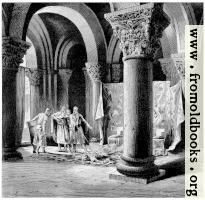
210.—Edward the Confessor’s Chapel, Westminster Abbey,—now used as the Pix office.

210.—Edward the Confessor’s Chapel, Westminster Abbey,—now used as the Pix office.

Old England: A Pictorial Museum (1845)

“Under its original name of the Isle of Bramble or thorn-ea, Westminster was a place of importance before London existed. [...] “The Saxon king Sebert (597 – 616) built a monastery on the site now occ [...]

Keywords: abbeys, churches, castles, anglosaxon remains

Places shown: Westminster; London; England

Added: 2005-12-20

Image status: public domain, hence royalty-free stock image; usage credit requested

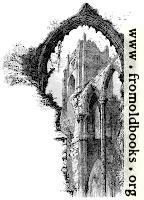
211.—Windows from the Palace of Westminster

211.—Windows from the Palace of Westminster

Old England: A Pictorial Museum (1845)

The windows are supposed here to be of Saxon origin; that is, dating between A.D. 440 and A.D. 1100 or so. “A doorway remaining of the old palace at Westminster exhibits the triangular arch (Fig. 212) [...]

Keywords: windows, arches, anglosaxon remains

Places shown: Westminster; London; England

Added: 2005-12-20

Image status: public domain, hence royalty-free stock image; usage credit requested

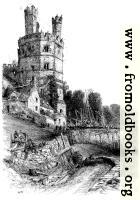
209.—Tower of Earl’s Barton Church

209.—Tower of Earl’s Barton Church

Old England: A Pictorial Museum (1845)

The church in Earl’s Barton, in Northamptonshire, is a work of several periods of our Gothic architecture; but the tower is now universally admitted to be of Saxon construction (Fig. 209). It exhibits [...]

Keywords: towers, churches, anglosaxon remains

Places shown: Earl’s Barton; Northamptonshire; England

Added: 2005-12-20

Image status: public domain, hence royalty-free stock image; usage credit requested

[1]